
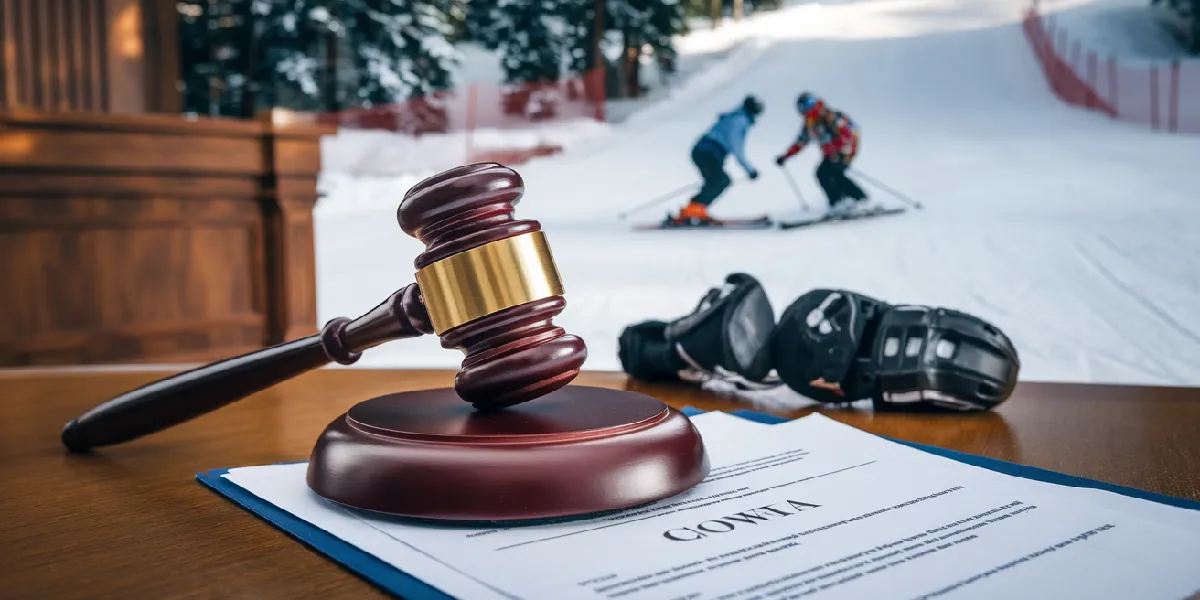
When Gwyneth Paltrow stepped into a Park City, Utah courtroom in March 2023, the case ostensibly centered on a relatively straightforward question: who crashed into whom on a beginner ski slope at Deer Valley Resort seven years earlier? Yet the eight-day trial that unfolded pitting the Oscar-winning actress against retired optometrist Terry Sanderson became a fascinating case study in celebrity litigation, evidentiary challenges in personal injury claims, and the peculiarities of ski accident liability.
The Collision: Competing Narratives
The facts were surprisingly contested for what seemed like a simple slope-side encounter. On February 26, 2016, Paltrow and Sanderson’s ski paths crossed on Bandana, a green (beginner) run at Deer Valley. Beyond this basic circumstance, the parties presented diametrically opposed versions of events.
Sanderson initially sought $3.1 million in damages, claiming Paltrow had slammed into him from behind, causing him to fall face-first in the snow, resulting in broken ribs and lasting neurological damage including a concussion and personality changes. His lawsuit, filed in 2019, described the incident as a “hit-and-run” where Paltrow allegedly skied away after the collision without ensuring his well-being.
Paltrow countersued for $1 in symbolic damages plus attorney fees, maintaining that Sanderson had actually crashed into her from behind. Her legal team argued that the retired optometrist was the uphill skier who had responsibility to avoid her under the skier’s code.
Legal Framework: The Skier’s Code and Liability
The case turned largely on the application of the skier’s responsibility code, an industry standard that includes the principle that the uphill or overtaking skier must avoid those below. This code isn’t merely a set of safety guidelines in many ski states including Utah, it forms the basis of legal liability determinations.
Judge Kent Holmberg instructed the jury on these principles, emphasizing that the uphill skier bears primary responsibility for avoiding collisions. This instruction became crucial to the case’s outcome, as both parties claimed the other was the uphill skier.
Ski collision cases have this unique evidentiary challenge, Unlike vehicle accidents where physical evidence often tells the story, ski collisions rarely leave conclusive physical markers. Skis don’t leave skid marks; snow conditions change continuously. This places enormous importance on eyewitness testimony, which itself is notoriously unreliable.
The trial also highlighted less-discussed aspects of ski liability law, including the legal standard for post-collision responsibility. While Sanderson’s team portrayed Paltrow’s departure from the scene as callous and potentially negligent, the defense successfully argued that Utah law doesn’t impose a duty to render aid in such circumstances.
The Celebrity Factor: Influence on Proceedings
One cannot discuss this trial without acknowledging the celebrity dimension that permeated every aspect of the proceedings. From jury selection to media coverage to the subtle dynamics in the courtroom, Paltrow’s fame created a distinctive legal environment.
During voir dire, potential jurors were questioned about their opinions of Paltrow and her lifestyle brand Goop—an unusual line of inquiry in a personal injury case. Throughout the trial, her celebrity status was both a potential liability (would jurors resent her wealth and fame?) and an asset (would they find her more credible than an ordinary citizen?).
I observed several days of testimony from the back of the courtroom, where the influence of celebrity was palpable. When Paltrow entered each morning, a subtle shift occurred in the room’s energy. Jurors straightened in their seats. Reporters leaned forward. This intangible factor cannot be measured, but it undoubtedly colored the proceedings.
Paltrow’s legal team navigated this dynamic skillfully, presenting her as simultaneously relatable (a mother skiing with her children) and sympathetic (a woman wrongfully accused and forced to defend herself). Her testimony, delivered in measured tones without the emotional outbursts that characterized some of Sanderson’s witnesses, projected credibility.
Evidentiary Challenges: Medicine and Memory
Perhaps the most legally significant aspect of the trial was its illustration of evidentiary challenges in cases involving claimed neurological injuries and long-delayed proceedings.
Sanderson’s medical experts testified about post-concussion syndrome and traumatic brain injury, while defense experts countered that his cognitive issues were consistent with normal aging and pre-existing conditions. The dueling expert testimony highlighted the continuing scientific uncertainty surrounding mild traumatic brain injury a medical frontier where objective diagnostic criteria remain elusive.
The Paltrow case exemplifies why brain injury litigation is so complex. Unlike a broken bone that shows up on an X-ray, mild traumatic brain injuries often don’t appear on standard imaging. Courts must weigh subjective symptom reporting against expert interpretation of neuropsychological testing, creating significant room for reasonable disagreement.
The seven-year gap between incident and trial created additional evidentiary hurdles. Memory degrades over time, and witnesses on both sides struggled to recall precise details. This timing issue wasn’t merely incidental it became legally significant as Paltrow’s team argued that the delay prejudiced their defense, a point Judge Holmberg acknowledged had merit though it didn’t ultimately derail the case.
Strategic Legal Maneuvering
For legal observers, the trial offered a masterclass in litigation strategy from both sides.
Sanderson’s team initially sought to frame the case as David versus Goliath—an ordinary man harmed by a privileged celebrity who allegedly abandoned him after causing injury. They emphasized Paltrow’s wealth (at one point asking about the cost of her ski lessons) and portrayed her as disconnected from the consequences of her actions.
Paltrow’s defense team, countered this narrative through several effective strategies:
- They emphasized Paltrow’s role as a mother skiing with her children, humanizing her and giving her a legitimate reason for being on a beginner slope
- They vigorously challenged the credibility of Sanderson’s key witness, creating doubt about whether he actually saw the collision as claimed
- They presented medical experts who testified that Sanderson’s health issues predated the collision
- They introduced evidence of Sanderson’s extensive post-collision activities, including international travel, undermining his claims of debilitating injury
Perhaps most effectively, they redirected attention to the fundamental question of skiing responsibility, returning repeatedly to the principle that the uphill skier must avoid those below and presenting compelling evidence that Sanderson was, in fact, the uphill party.
The defense successfully refocused the jury on the core liability question, rather than being distracted by Paltrow’s celebrity or Sanderson’s sympathetic position as an elderly man, they created a clear narrative: if he was uphill, he was responsible, regardless of the outcome.
The Verdict and Its Implications
After just over two hours of deliberation, the eight-person jury unanimously found for Paltrow, determining that Sanderson was 100% at fault for the collision. The verdict awarded Paltrow her requested $1 in symbolic damages.
In the legal community, the case has prompted renewed discussions about several important issues:
Statute of limitations in injury cases with delayed manifestation. While not directly at issue in this trial, the case highlights the challenges when injuries allegedly worsen over time. Utah’s three-year statute for personal injury allowed Sanderson’s claim, but defense argued the delay hampered their ability to gather evidence.
The role of expert testimony in neurological injury cases. The trial demonstrated the continuing tension between subjective symptom reporting and objective medical evidence in mild traumatic brain injury litigation.
The influence of wealth disparities in civil litigation. Paltrow could afford top-tier legal representation and expert witnesses. While Sanderson’s team was also experienced, the case raises questions about access to justice when resource disparities exist.
Media access in high-profile proceedings. Judge Holmberg’s decision to allow cameras in the courtroom made this case unusually accessible to the public, generating discussion about transparency versus potential media influence on proceedings.
Perhaps most significantly, the case offers a window into how civil courts handle “he said/she said” factual disputes with limited physical evidence. In such cases, witness credibility becomes paramount, and the burden of proof requiring plaintiffs to prove their claims by a preponderance of evidence operates as a significant hurdle.
Lessons for Practitioners
For legal practitioners, particularly those handling personal injury claims, the Paltrow trial offers several valuable lessons:
Document early and thoroughly. The seven-year gap between incident and trial created significant evidentiary challenges. This underscores the importance of securing witness statements, photographs, and other evidence as soon as possible after an incident.
Consider specialty rules and norms. The skier’s responsibility code played a decisive role in this case. Practitioners handling cases in specialized contexts (skiing, boating, etc.) must thoroughly understand the applicable industry standards that may have legal significance.
Manage client expectations about celebrity opponents. Sanderson’s legal team faced the challenge of a highly sympathetic defendant with unlimited resources. Managing client expectations about the challenges of litigating against prominent figures is essential.
Anticipate social media response. The case generated intense public interest and commentary. Attorneys handling high-profile matters must consider how social media dynamics might affect client interests and jury pools.
Conclusion: Justice on the Slopes
Whether justice was served depends on one’s perspective about the underlying facts, facts that remain contested despite the jury’s verdict. What’s clear is that the legal system functioned as designed: presenting competing narratives, applying relevant legal standards, and allowing a jury of peers to determine the more persuasive account.
In the end, perhaps the most remarkable aspect of the Paltrow trial was its demonstration that even with the extraordinary circumstance of celebrity involvement, the fundamental mechanics of civil litigation remain unchanged. The plaintiff bears the burden of proof. Credibility matters. And sometimes, after years of legal maneuvering, a case can still turn on the simple question of who was skiing uphill.