

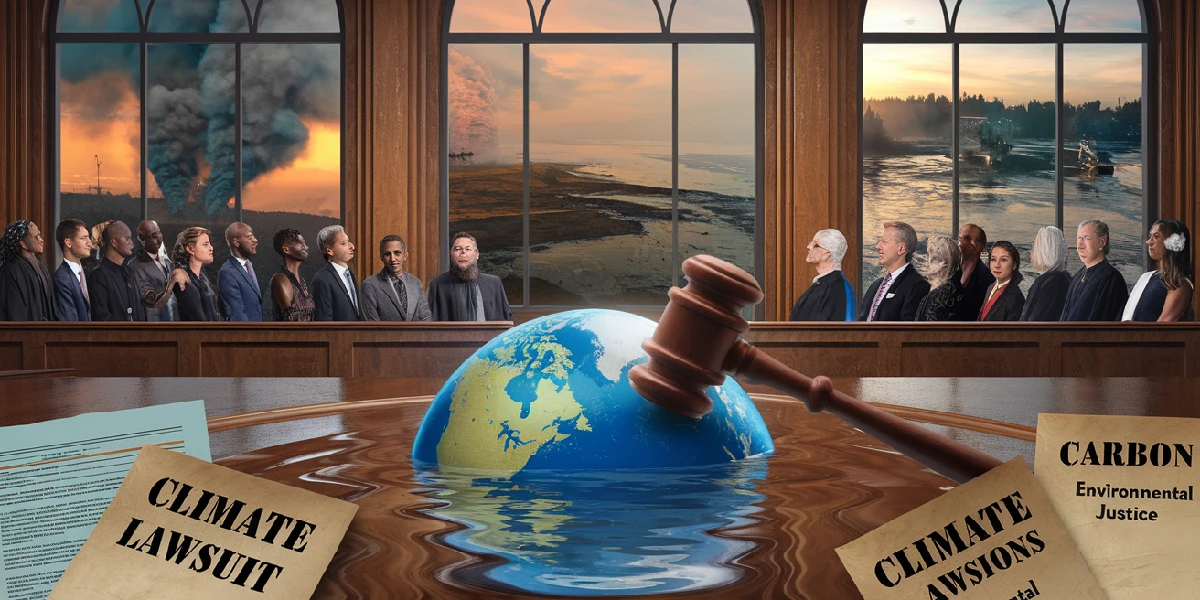
Climate litigation has emerged as one of the most significant legal phenomena of the 21st century, fundamentally transforming how courts, governments, and corporations approach environmental responsibility. The surge in climate-related lawsuits represents a paradigm shift where legal systems are increasingly being called upon to address the global impact of climate change through judicial mechanisms rather than solely relying on legislative or executive action.
The exponential growth of climate litigation reflects multiple converging factors that have created an unprecedented legal landscape. Scientific consensus on anthropogenic climate change has strengthened the evidentiary foundation for legal claims, while the tangible impacts of climate change from extreme weather events to sea-level rise have provided concrete harms that courts can adjudicate. This legal complexity has been further amplified by the emergence of new legal theories that connect climate change to fundamental human rights, constitutional protections, and intergenerational justice.
The democratization of legal action through strategic litigation has empowered diverse actors to challenge climate inaction. Youth activists, indigenous communities, environmental organizations, and concerned citizens have increasingly turned to courts when political processes fail to deliver adequate climate action. This grassroots mobilization has created a global impact that transcends traditional boundaries between environmental law, human rights law, and corporate accountability. The result is a rapidly evolving legal landscape where climate litigation is reshaping the balance of power between citizens, governments, and corporations in addressing the climate crisis.
2. Types of Climate Litigation Cases
The taxonomy of climate litigation reflects the multifaceted nature of climate change as both a scientific phenomenon and a legal challenge. Understanding these different categories is essential for comprehending the legal complexity that characterizes modern climate jurisprudence and the diverse strategies employed by litigants seeking judicial remedies for climate-related harms.
Mitigation-focused climate litigation represents the most common category, targeting efforts to reduce greenhouse gas emissions and prevent future climate change. These cases typically challenge government policies or corporate practices that contribute to emissions, seeking court orders to compel more aggressive climate action. The legal theories underlying mitigation cases often invoke constitutional rights, statutory duties, or tort principles to establish governmental or corporate obligations to reduce emissions. The legal complexity of these cases frequently centers on questions of causation, standing, and the appropriate role of courts in shaping climate policy.
Adaptation and loss-and-damage climate litigation addresses the consequences of climate change that are already occurring or inevitable. These cases seek compensation for climate-related harms or demand that governments and corporations take steps to protect vulnerable populations from climate impacts. Adaptation litigation often involves challenges to inadequate infrastructure planning, coastal protection measures, or emergency response systems. The global impact of these cases extends beyond immediate parties, as successful adaptation litigation can establish precedents for climate resilience obligations and create new pathways for climate justice.
Rights-based climate litigation has emerged as a particularly powerful category, grounding climate claims in fundamental human rights principles. These cases argue that climate change violates basic rights to life, health, property, and dignity, particularly for vulnerable populations including children, indigenous communities, and future generations. The legal complexity of rights-based climate litigation often involves novel interpretations of constitutional provisions and international human rights instruments, pushing courts to consider the temporal and spatial dimensions of climate harm in unprecedented ways.
3. Key Global Climate Litigation Trends
The evolution of climate litigation trends reveals a rapidly maturing legal field that is expanding in scope, sophistication, and global impact. These trends reflect both the growing urgency of climate action and the increasing recognition that legal systems must play a central role in addressing climate change when political institutions fail to act adequately.
Geographic expansion represents one of the most significant climate litigation trends, with cases emerging in jurisdictions across the Global South that previously had limited climate jurisprudence. Countries including India, Pakistan, Colombia, and South Africa have witnessed landmark climate litigation cases that demonstrate the universal nature of climate impacts and the global reach of legal strategies developed in Western jurisdictions. This geographic diversification has enriched the legal complexity of climate law by introducing different constitutional frameworks, legal traditions, and cultural perspectives on environmental protection.
The substantive expansion of climate litigation beyond traditional environmental law represents another crucial trend. Modern climate litigation cases increasingly incorporate human rights principles, corporate governance standards, and intergenerational justice concepts that transcend conventional environmental protection frameworks. This interdisciplinary approach has created new legal complexity while also expanding the potential plaintiff pool and legal theories available to climate litigants.
Strategic sophistication in climate litigation has evolved significantly, with legal teams employing increasingly complex scientific evidence, economic modeling, and attribution studies to strengthen their cases. The integration of climate science into legal arguments has created new legal complexity around questions of causation, but has also provided more robust foundations for establishing liability and damages. This scientific sophistication has contributed to the global impact of climate litigation by creating transferable legal precedents and evidentiary standards.
The trend toward corporate targeting in climate litigation represents a strategic shift that recognizes the limitations of government-focused litigation. Climate litigation cases against fossil fuel companies, financial institutions, and other corporations have introduced new theories of liability based on deception, fiduciary duty, and environmental justice. This corporate focus has expanded the global impact of climate litigation by creating financial incentives for climate action and raising the reputational costs of climate inaction.
4. Landmark Climate Change Lawsuits
The landscape of climate litigation cases has been defined by several landmark decisions that have established crucial precedents and demonstrated the potential global impact of judicial intervention in climate governance. These cases have not only shaped legal doctrine but have also influenced public discourse, policy development, and subsequent litigation strategies worldwide.
The Urgenda v. Netherlands case stands as perhaps the most influential climate litigation decision to date, establishing the principle that governments have legal obligations to protect citizens from climate change based on human rights principles. The Dutch Supreme Court’s 2019 ruling ordered the government to reduce emissions by at least 25% by 2020 compared to 1990 levels, marking the first time a court mandated specific emission reductions based on climate science and human rights law. The legal complexity of the decision involved novel interpretations of the European Convention on Human Rights and the duty of care owed by governments to their citizens.
The Juliana v. United States case, though ultimately unsuccessful, has had profound global impact on youth-led climate litigation. The case, filed by 21 young plaintiffs, argued that the federal government’s actions contributing to climate change violated their constitutional rights to life, liberty, and property. Despite procedural obstacles that prevented the case from reaching trial, Juliana has inspired similar youth-led cases worldwide and has contributed to the development of legal theories around intergenerational justice and constitutional climate rights.
In the Global South, cases like Urgenda Foundation v. State of the Netherlands have inspired similar litigation with significant global impact. The Pakistani case Leghari v. Federation of Pakistan resulted in the creation of climate change commissions and judicial oversight of climate policy implementation. The Colombian Supreme Court’s decision in Future Generations v. Ministry of the Environment ordered the government to develop plans to reduce deforestation and protect the rights of future generations, demonstrating how climate litigation can address specific environmental challenges while establishing broader principles of intergenerational justice.
The German Federal Constitutional Court’s decision in Neubauer v. Germany represents another landmark in climate litigation cases, finding that the country’s climate protection measures were insufficient and violated the rights of future generations. The court’s reasoning emphasized the intergenerational dimension of climate change and the need for current climate policies to preserve future freedom and life opportunities. This decision has influenced subsequent climate litigation across Europe and beyond, contributing to the global impact of rights-based climate jurisprudence.
5. Role of International Law and Treaties
International law and treaties have become increasingly central to climate litigation, providing both substantive norms and procedural mechanisms that shape the legal complexity of climate cases. The integration of international climate commitments into domestic legal systems has created new avenues for climate litigation while also raising complex questions about the relationship between international obligations and domestic legal remedies.
The Paris Agreement has emerged as a crucial reference point in climate litigation cases, despite its primarily aspirational nature. Litigants have argued that government failure to meet Paris Agreement commitments violates domestic legal obligations, while governments have countered that the Agreement’s structure precludes direct legal enforcement. The legal complexity surrounding the Paris Agreement in domestic litigation reflects broader questions about the relationship between international climate commitments and domestic legal obligations.
The UN Framework Convention on Climate Change (UNFCCC) and its associated protocols have provided foundational principles for climate litigation, including the concept of common but differentiated responsibilities and the recognition of climate change as a global problem requiring collective action. These principles have influenced the development of climate litigation strategies that seek to hold governments accountable for their contributions to global emissions while recognizing the differential impacts of climate change on vulnerable populations.
International human rights law has become increasingly important in climate litigation, with litigants arguing that climate change violates fundamental human rights including the rights to life, health, property, and cultural identity. The global impact of rights-based climate litigation has been enhanced by the development of international jurisprudence that recognizes the connection between environmental degradation and human rights violations. Regional human rights courts and treaty bodies have begun to address climate change as a human rights issue, creating precedents that influence domestic climate litigation.
The interaction between international law and domestic climate litigation has created new legal complexity around questions of justiciability, standing, and remedies. Courts must navigate the tension between respecting international commitments and maintaining appropriate separation of powers, while also considering the global impact of their decisions on international climate governance. This intersection of international and domestic law has contributed to the evolution of climate litigation as a transnational legal phenomenon.
6. Climate Litigation Against Corporations
Corporate climate litigation has emerged as a distinctive and increasingly significant category that targets private sector actors for their contributions to climate change. This evolution reflects growing recognition that meaningful climate action requires not only government policy but also fundamental changes in corporate behavior, particularly among fossil fuel companies and other major emitters.
The legal complexity of corporate climate litigation often centers on questions of causation, duty, and damages that differ significantly from government-focused cases. Establishing direct causal links between specific corporate actions and climate harms requires sophisticated scientific evidence and attribution studies. Corporate defendants typically have substantial resources to contest liability, leading to protracted litigation with complex evidentiary proceedings. The global impact of these cases extends beyond immediate legal outcomes, influencing corporate risk assessment, investor behavior, and industry practices.
Fossil fuel liability represents the most prominent category of corporate climate litigation, with cases targeting major oil, gas, and coal companies for their contributions to climate change. These cases often draw parallels to tobacco litigation, arguing that fossil fuel companies knew about climate risks but continued to promote fossil fuel use while funding climate denial. The legal complexity of these cases involves novel applications of tort law, consumer protection statutes, and securities regulations to climate-related harms.
Greenwashing litigation has emerged as another significant category, targeting companies that make misleading claims about their environmental performance or climate commitments. These cases often involve securities fraud, consumer protection, or false advertising claims related to corporate climate representations. The global impact of greenwashing litigation extends beyond immediate legal remedies to influence corporate disclosure practices and marketing strategies related to climate action.
Financial sector climate litigation has begun to target banks, insurance companies, and asset managers for their financing of fossil fuel projects or failure to adequately assess climate risks. These cases raise complex questions about fiduciary duty, prudential regulation, and the integration of climate risks into financial decision-making. The legal complexity of financial sector cases often involves technical issues related to risk assessment, disclosure requirements, and the scope of fiduciary obligations in the context of climate change.
7. Challenges and Criticisms of Climate Litigation
Despite its growing prominence and global impact, climate litigation faces significant challenges and criticisms that raise questions about its effectiveness, legitimacy, and unintended consequences. These legal barriers and limitations reflect both the inherent complexity of climate change as a legal issue and broader concerns about the appropriate role of courts in addressing complex policy challenges.
Jurisdictional and procedural legal barriers represent some of the most significant challenges facing climate litigation. Standing requirements, which determine who can bring legal claims, often prove difficult to satisfy in climate cases due to the diffuse nature of climate harms and the temporal distance between emissions and impacts. The legal complexity of establishing causation between specific actions and climate damages has led many courts to dismiss cases on procedural grounds without reaching substantive climate issues.
The separation of powers doctrine has been invoked by courts reluctant to intrude into what they perceive as quintessentially political questions. Critics argue that climate litigation inappropriately seeks to use courts to achieve policy outcomes that should be determined through democratic processes. This criticism highlights the tension between legal rights and political decision-making that characterizes much climate litigation. The global impact of these separation of powers concerns varies significantly across different legal systems and constitutional frameworks.
Remedy and enforcement challenges represent another significant category of legal barriers. Even when plaintiffs succeed in establishing liability or governmental obligations, courts often struggle to craft appropriate remedies that are both legally sound and practically effective. The legal complexity of climate remedies requires courts to balance competing interests, assess technical feasibility, and consider the broader implications of their orders for climate governance.
The slow pace of climate litigation has drawn criticism from those who argue that legal processes are inadequate to address the urgency of climate change. Complex climate cases often take years or decades to resolve, during which time climate impacts continue to worsen. This temporal mismatch between legal processes and climate urgency has led some to question whether climate litigation can deliver the rapid action needed to address climate change effectively.
Backlash and counter-litigation represent emerging challenges as climate litigation gains prominence. Some jurisdictions have enacted legislation designed to limit climate litigation, while corporations and governments have increasingly employed strategic litigation to challenge climate activists and organizations. This backlash raises questions about the long-term sustainability of climate litigation strategies and the need for legal protections for climate litigants.
8. Future Outlook and Policy Impact
The future of climate litigation will likely be shaped by several key trends and developments that reflect both the maturation of the field and the evolving nature of climate challenges. These developments suggest that climate litigation will continue to play an increasingly important role in climate governance, while also facing new challenges and opportunities.
The integration of climate litigation with broader climate governance frameworks represents a significant trend that will likely accelerate in the coming years. Courts are increasingly coordinating with executive and legislative branches to develop comprehensive approaches to climate action, rather than simply issuing isolated orders. This integration has the potential to enhance the global impact of climate litigation by creating more coherent and effective climate governance systems.
Scientific and technological developments will continue to influence the future of climate litigation by providing new tools for attribution, impact assessment, and remedy design. Advances in climate science, particularly in extreme weather attribution and downscaling techniques, will strengthen the evidentiary foundation for climate litigation cases. Similarly, developments in monitoring and verification technologies will enhance the ability of courts to assess compliance with climate-related orders.
The expansion of climate litigation to new areas of law and new categories of defendants will likely continue as legal theories mature and new climate impacts emerge. Future of climate litigation may include increased focus on adaptation failures, loss and damage claims, and the climate obligations of financial institutions and other indirect contributors to climate change. The legal complexity of these emerging areas will require continued innovation in legal theory and practice.
International coordination and harmonization of climate litigation approaches may become increasingly important as the global impact of climate change becomes more apparent. This could involve the development of international legal instruments specifically addressing climate litigation, enhanced cooperation between courts across jurisdictions, and the emergence of transnational legal networks focused on climate issues.
The relationship between climate litigation and corporate governance will likely continue to evolve, with increased integration of climate considerations into fiduciary duties, disclosure requirements, and risk management standards. This evolution may reduce the need for some types of climate litigation while creating new opportunities for legal action based on corporate governance failures.
9. Conclusion
The evolution of climate litigation represents one of the most significant developments in contemporary environmental law, with far-reaching implications for climate governance, legal practice, and democratic accountability. The global impact of climate litigation has already begun to reshape the relationship between law and climate change, creating new avenues for climate action while also raising fundamental questions about the role of courts in addressing complex policy challenges.
The legal complexity that characterizes modern climate litigation reflects both the scientific sophistication of climate change as a phenomenon and the creative legal strategies employed by litigants seeking judicial remedies for climate-related harms. This complexity has contributed to the field’s rapid evolution and has pushed legal systems to grapple with unprecedented questions about causation, remedy, and the temporal and spatial dimensions of legal responsibility.
The diversity of climate litigation trends across different jurisdictions and legal systems has created a rich body of comparative experience that continues to inform legal strategy and doctrine development. The success of landmark climate litigation cases has demonstrated the potential for judicial intervention to catalyze climate action, while also highlighting the limitations and challenges that characterize this approach to climate governance.
The future of climate litigation will likely be shaped by continued scientific advancement, evolving legal theories, and changing political and social contexts. The field’s maturation will require addressing current legal barriers while also developing new approaches to remedy, enforcement, and coordination with other climate governance mechanisms. The global impact of these developments will depend on the ability of legal systems to balance competing demands for climate action, democratic accountability, and judicial restraint.
As climate litigation continues to evolve, its ultimate success will be measured not only by specific legal victories but by its contribution to broader climate governance systems that can deliver the rapid and comprehensive action needed to address climate change. The legal complexity of this challenge requires continued innovation, collaboration, and commitment from legal practitioners, courts, and civil society organizations working to harness the power of law in service of climate justice.The trajectory of climate litigation suggests that law will continue to play an increasingly important role in climate governance, complementing and sometimes substituting for political processes that have proven inadequate to address the scale and urgency of climate change. The global impact of this legal evolution extends far beyond individual cases or jurisdictions, contributing to a fundamental reimagining of the relationship between law, governance, and environmental protection in the climate era.