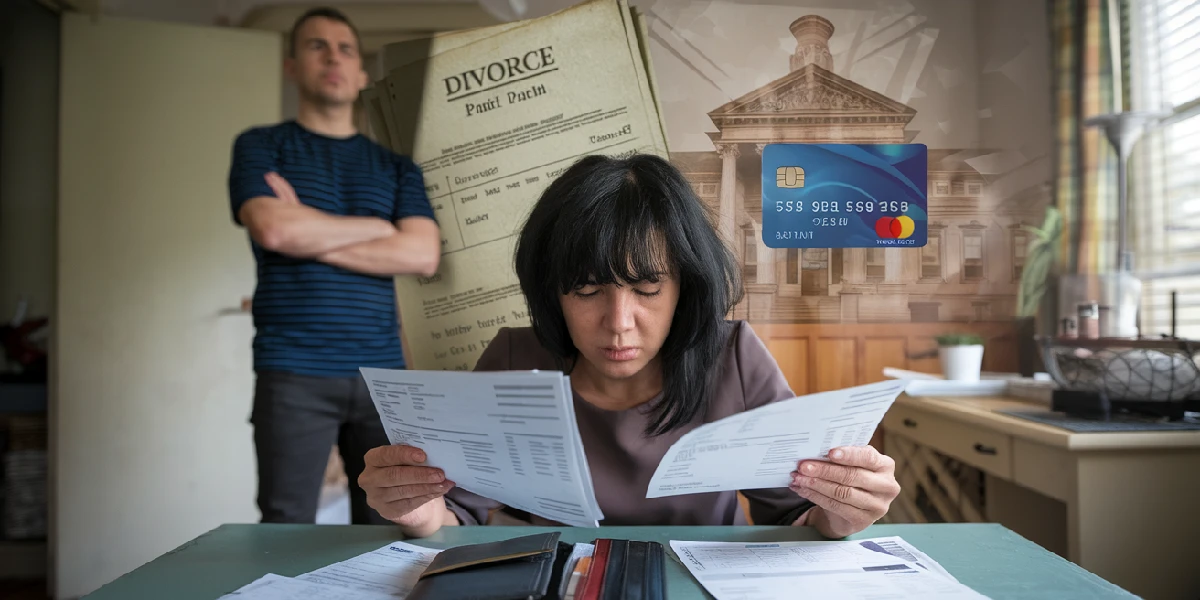
Economic abuse represents one of the most insidious yet under-recognized forms of domestic violence, characterized by the systematic control of a partner’s financial resources and economic autonomy. Unlike physical violence, which leaves visible marks, economic abuse operates through subtle mechanisms of financial control that can trap victims in abusive relationships for years. As legal systems worldwide grapple with evolving definitions of domestic violence, the recognition of economic abuse as legitimate grounds for divorce has emerged as a critical frontier in matrimonial law.
The contemporary understanding of economic abuse extends far beyond simple financial deprivation. It encompasses a complex web of controlling behaviors designed to create and maintain financial dependence, effectively imprisoning victims within abusive relationships. This form of abuse often intersects with other types of domestic violence, creating multilayered patterns of control that can be particularly devastating for victims seeking to escape harmful marriages.
What Constitutes Economic Abuse?
Economic abuse manifests through various sophisticated mechanisms of financial control that systematically undermine a victim’s economic independence and decision-making capacity. The primary characteristic of economic abuse involves the deliberate restriction of access to financial resources, including bank accounts, credit cards, cash, and other monetary assets. Perpetrators often maintain exclusive control over household finances, preventing their partners from accessing funds necessary for basic needs or personal autonomy.
Employment interference represents another critical dimension of economic abuse. This includes preventing a spouse from obtaining or maintaining employment, sabotaging job interviews, creating disturbances at the victim’s workplace, or demanding that the victim quit their job. Such tactics ensure the victim remains financially dependent and unable to develop the economic resources necessary for independence.
Educational sabotage constitutes a particularly insidious form of economic abuse, as it attacks the victim’s long-term earning capacity and professional development. Perpetrators may prevent their partners from pursuing educational opportunities, vocational training, or professional development courses that could enhance their economic prospects. This creates a cycle of dependence that becomes increasingly difficult to break over time.
Debt-related abuse involves the unauthorized use of the victim’s credit, taking out loans or credit cards in the victim’s name without consent, or forcing the victim to assume responsibility for debts incurred by the perpetrator. This form of abuse can have lasting consequences for the victim’s financial stability and creditworthiness, extending the impact of abuse well beyond the relationship itself.
Economic Abuse Divorce Law: A Global Perspective
The recognition of economic abuse within matrimonial law has gained significant momentum internationally, with several countries implementing comprehensive legislative frameworks to address financial control in domestic relationships. The United Kingdom’s Domestic Abuse Act 2021 represents a landmark achievement in this regard, explicitly recognizing economic abuse as a form of domestic violence and providing clear legal definitions and remedies.
Under the UK’s comprehensive framework, economic abuse is defined as behavior that controls, coerces, or threatens a person’s ability to acquire, use, or maintain financial resources. This includes controlling access to financial resources, preventing someone from working or accessing education, and exploiting financial resources without consent. The Act provides courts with enhanced powers to issue protective orders and financial remedies specifically addressing economic abuse in divorce proceedings.
Australia has similarly advanced in recognizing economic abuse through its Family Law Act amendments, which acknowledge financial abuse as a form of family violence. Australian courts now consider economic abuse when making decisions about property settlement, spousal maintenance, and child custody arrangements. This recognition has significantly improved outcomes for victims of economic abuse in divorce proceedings.
Canada’s approach to economic abuse legislation has been particularly progressive, with provinces like Ontario implementing specific provisions within their domestic violence legislation that address financial control. The Canadian legal framework emphasizes the intersection between economic abuse and other forms of domestic violence, recognizing that financial control often serves as a foundation for other abusive behaviors.
Economic Abuse Divorce in India: The Legal Vacuum
India’s current matrimonial legal framework presents significant gaps in addressing economic abuse, despite the country’s comprehensive legislation on domestic violence. The Protection of Women from Domestic Violence Act (PWDVA) 2005 does include economic abuse within its definition of domestic violence, defining it as the deprivation of economic or financial resources to which the woman is entitled under law or customs, or which the woman requires out of necessity.
However, the practical implementation of these provisions remains challenging due to several systemic issues. The burden of proof in economic abuse cases often falls heavily on the victim, who must demonstrate patterns of financial control that may be difficult to document. Additionally, the intersection between the PWDVA and matrimonial laws creates jurisdictional complexities that can delay or complicate legal proceedings.
The Hindu Marriage Act, 1955, and other personal laws governing marriage and divorce in India do not explicitly recognize economic abuse as grounds for divorce. While cruelty is recognized as a ground for divorce under Section 13 of the Hindu Marriage Act, courts have been inconsistent in interpreting whether economic abuse constitutes cruelty sufficient to grant divorce.
Recent judicial trends suggest a growing awareness of economic abuse among Indian courts, with several High Courts recognizing financial control as a form of mental cruelty. However, the absence of specific legislation addressing economic abuse in divorce proceedings creates uncertainty and inconsistency in legal outcomes.
Key Legal Cases on Economic Abuse
International jurisprudence has produced several landmark cases that have shaped the legal understanding of economic abuse in divorce proceedings. The UK case of Yemshaw v. Hounslow London Borough Council (2011) established important precedents regarding the interpretation of domestic violence to include non-physical forms of abuse, including economic control.
In the Australian context, the case of Kennon v. Kennon (1997) recognized that economic abuse could constitute family violence, leading to significant changes in property settlement orders. The court’s recognition that financial control could be used as a weapon of abuse has influenced subsequent decisions across Australia’s family law system.
Indian courts have begun to recognize economic abuse in several significant cases, though the jurisprudence remains evolving. In Samar Ghosh v. Jaya Ghosh (2007), the Supreme Court of India outlined various forms of cruelty that could constitute grounds for divorce, including financial deprivation and control. While not explicitly using the term “economic abuse,” the court’s reasoning laid important groundwork for future recognition.
The Delhi High Court’s decision in Reema Aggarwal v. Anupam Aggarwal (2004) specifically addressed financial control as a form of mental cruelty, recognizing that systematic deprivation of financial resources could constitute grounds for divorce. This case has been influential in subsequent decisions across various High Courts in India.
Economic Abuse Legislation: Global Developments
The global trend toward recognizing economic abuse has accelerated in recent years, with numerous countries considering or implementing comprehensive legislation addressing financial control in domestic relationships. The European Union has been particularly proactive, with the Council of Europe’s Istanbul Convention requiring member states to recognize economic abuse as a form of domestic violence.
New Zealand’s approach to economic abuse legislation has been particularly comprehensive, with the country’s Domestic Violence Act amendments specifically addressing financial abuse. The legislation provides clear definitions and remedies, including provisions for financial compensation and restoration of economic resources.
The United States has seen significant developments at the state level, with several states implementing specific legislation addressing economic abuse. California’s Family Code includes provisions addressing financial abuse in domestic relationships, while New York has implemented comprehensive legislation recognizing economic abuse as grounds for protective orders.
International organizations, including the United Nations, have increasingly recognized economic abuse as a critical component of domestic violence. The UN’s Declaration on the Elimination of Violence against Women has been interpreted to include economic abuse, encouraging member states to develop comprehensive legal frameworks addressing financial control.
The Psychological and Social Impact of Economic Abuse
The psychological consequences of economic abuse are profound and long-lasting, often extending well beyond the termination of the abusive relationship. Victims of economic abuse frequently experience severe anxiety, depression, and post-traumatic stress disorder related to their financial insecurity and loss of autonomy. The constant stress of financial uncertainty, combined with the loss of economic independence, can create lasting psychological trauma.
The social implications of economic abuse are equally significant, as victims often become isolated from support networks due to their financial dependence. The inability to access financial resources can prevent victims from maintaining social relationships, participating in community activities, or seeking professional help. This isolation serves the perpetrator’s goal of maintaining control while making it increasingly difficult for victims to recognize the abuse or seek assistance.
Gender-based analysis reveals that economic abuse disproportionately affects women, who are more likely to experience financial dependence within marriages due to societal expectations and structural inequalities. The intersection of economic abuse with gender-based violence creates particular challenges for female victims, who may face additional barriers to economic independence due to workplace discrimination, caregiving responsibilities, and social stigma.
The intergenerational impact of economic abuse extends to children, who may witness financial control and develop normalized attitudes toward such behavior. Children in economically abusive households may experience reduced educational opportunities, social isolation, and long-term psychological effects that can perpetuate cycles of abuse.
Conclusion
The recognition of economic abuse as legitimate grounds for divorce represents a crucial evolution in matrimonial law, reflecting a deeper understanding of the complex dynamics of domestic violence. While countries like the UK and Australia have made significant progress in implementing comprehensive economic abuse legislation, many jurisdictions, including India, continue to struggle with legal frameworks that adequately address financial control in domestic relationships.
The development of effective economic abuse divorce law requires a multifaceted approach that combines clear legal definitions, robust enforcement mechanisms, and comprehensive support services for victims. Legal systems must evolve to recognize that economic abuse can be as devastating as physical violence, often serving as a foundation for other forms of abuse and creating barriers to escape that can trap victims for years.
The future of economic abuse legislation lies in international cooperation, shared best practices, and continued advocacy for victims’ rights. As awareness of economic abuse grows, legal systems worldwide must adapt to provide meaningful remedies for victims while holding perpetrators accountable for their actions. The recognition of economic abuse as grounds for divorce is not merely a legal technicality but a fundamental recognition of human dignity and the right to economic autonomy within intimate relationships.
The path forward requires continued collaboration between legal professionals, policymakers, domestic violence advocates, and survivors themselves to ensure that economic abuse legislation addresses the real-world challenges faced by victims seeking to escape financial control. Only through such comprehensive approaches can legal systems effectively address the complex phenomenon of economic abuse and provide meaningful justice for those who have suffered under its devastating effects.