
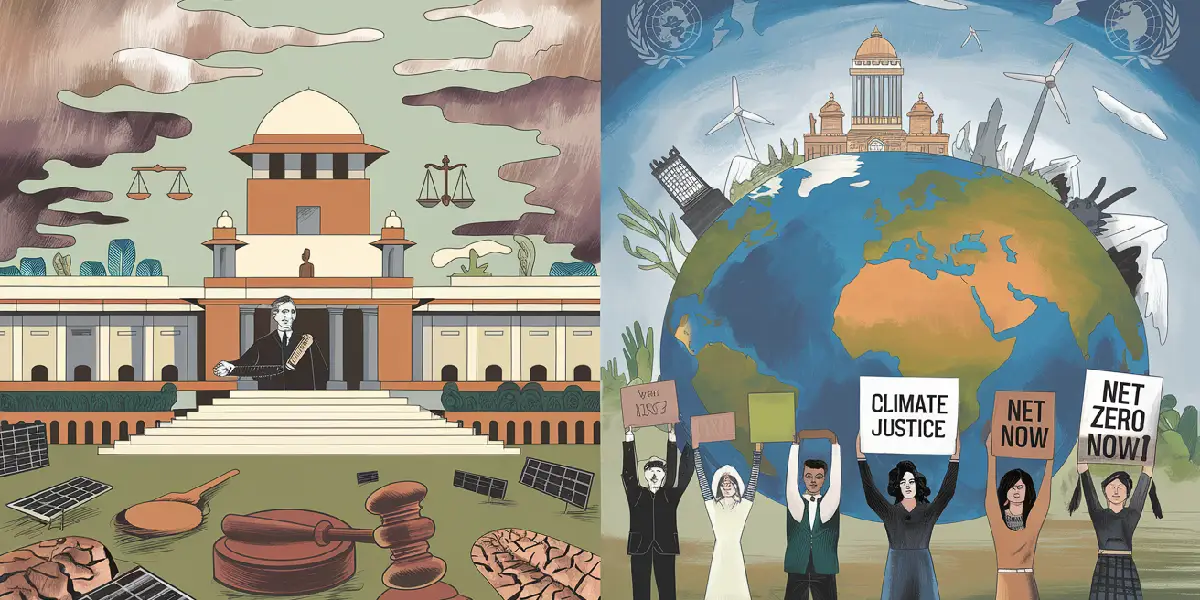
Climate change litigation has emerged as a powerful tool for environmental advocacy, regulatory enforcement, and climate action worldwide. As governments grapple with the urgent need to address greenhouse gas emissions and climate impacts, courts have increasingly become battlegrounds where environmental law, constitutional rights, and climate science intersect. India, with its unique legal framework rooted in constitutional environmental rights and traditional ecological wisdom, presents a fascinating case study when compared to litigation strategies employed in the European Union, United States, and other developing nations.
This analysis examines how India’s distinctive approach to climate litigation—characterized by public interest litigation, fundamental rights discourse, and intergenerational equity principles compares with the diverse regulatory and judicial strategies adopted globally, revealing both convergent trends and divergent methodologies in the pursuit of climate justice.
India’s Environmental Legal Framework and Climate Litigation
Constitutional Foundations
India’s approach to environmental protection and climate litigation is fundamentally anchored in its Constitution, particularly Article 21 (right to life) and the Directive Principles of State Policy. The Supreme Court of India has consistently interpreted Article 21 to include the right to a clean and healthy environment, establishing a robust constitutional foundation for environmental litigation that many other jurisdictions lack.
The landmark case of M.C. Mehta v. Union of India (1987) established the principle that the right to life encompasses environmental quality, creating precedent for climaterelated litigation. This constitutional approach distinguishes India from many Western democracies where environmental rights are primarily statutory rather than constitutional.
Public Interest Litigation (PIL) Framework
India’s PIL system allows for broad standing requirements, enabling civil society organizations, concerned citizens, and even courts themselves to initiate environmental litigation. This accessibility has facilitated numerous climate-related cases, including challenges to coal mining projects, industrial pollution, and inadequate climate policies.
The Urgenda Foundation v. State of the Netherlands case, while European, has influenced Indian legal thinking about government obligations regarding climate action. However, India’s PIL framework provides potentially broader access to justice than many Western legal systems that maintain stricter standing requirements.
Key Indian Climate Litigation Cases
Ridhima Pandey v. Union of India (2017): Filed by a nine-year-old plaintiff, this case challenged the government’s inadequate response to climate change, arguing that inaction violated constitutional rights. While the case was dismissed on procedural grounds, it highlighted the potential for rights-based climate litigation in India.
Hanuman Laxman Aroskar v. Union of India (2019): This case challenged India’s climate commitments as insufficient under the Paris Agreement, though it was ultimately dismissed. The case demonstrated attempts to use international climate law as a basis for domestic litigation.
Various Coal Mining Cases: Multiple cases challenging coal mining projects and thermal power plants have incorporated climate change arguments, though with mixed success.
Comparative Analysis: Global Climate Litigation Strategies
European Union Approach
The EU’s climate litigation landscape is characterized by sophisticated legal frameworks, strong regional coordination, and increasing success in compelling government action.
Landmark Case: Urgenda Foundation v. State of the Netherlands (2019) This groundbreaking case established that governments have legal obligations to protect citizens from climate change based on human rights law. The Dutch Supreme Court ordered the government to reduce emissions by at least 25% by 2020 compared to 1990 levels, marking the first time a court ordered a government to take specific climate action.
Legal Foundations: EU climate litigation often relies on the European Convention on Human Rights, particularly the right to life and right to family life. The EU’s comprehensive climate regulatory framework provides additional legal hooks for litigation.
Regulatory Integration: The EU’s approach integrates litigation with robust regulatory frameworks, including the European Green Deal, emissions trading systems, and binding renewable energy targets.
United States Approach
The US climate litigation landscape is complex, reflecting federalism, separation of powers concerns, and varying judicial receptivity to climate claims.
Juliana v. United States (Ongoing): This youth-led constitutional climate case argues that the federal government’s energy policies violate young people’s constitutional rights to life, liberty, and property. Despite procedural challenges, it has maintained momentum and influenced global youth climate litigation.
State-Level Innovation: States like California have pioneered climate litigation against fossil fuel companies, seeking damages for climate impacts. Cases like People of California v. BP P.L.C. represent a growing trend of municipal and state governments suing major emitters.
Corporate Accountability: The US has seen significant litigation targeting corporations, with cases like Exxon Mobil Corp. v. Attorney General of Massachusetts focusing on corporate disclosure of climate risks and alleged deception about climate science.
Developing Country Perspectives
Colombia – Demanda Generaciones Futuras v. Minambiente (2018): Colombia’s Supreme Court declared that deforestation of the Amazon violated the rights of future generations, ordering the government to develop plans to reduce deforestation. This case exemplifies how developing countries are using intergenerational equity principles in climate litigation.
Pakistan – Leghari v. Federation of Pakistan (2015): This case successfully argued that the government’s failure to implement climate policy violated fundamental rights. The court established ongoing judicial oversight of climate policy implementation.
Philippines – In re: Greenpeace Southeast Asia (Ongoing): The Philippines’ Commission on Human Rights is investigating whether major fossil fuel companies violated human rights through their contribution to climate change.
Comparative Strengths and Weaknesses
India’s Distinctive Advantages
Constitutional Environmental Rights: India’s constitutional framework provides stronger foundations for climate litigation than many jurisdictions relying solely on statutory environmental law.
Accessible Justice: The PIL system offers broader access to courts than many Western legal systems, potentially enabling more diverse climate litigation.
Intergenerational Equity: Indian courts have embraced concepts of intergenerational equity and sustainable development, providing philosophical foundations for climate action.
Flexible Judicial Remedies: Indian courts have shown willingness to craft creative remedies and maintain ongoing supervision of environmental cases.
Challenges in the Indian Context
Implementation Gaps: Despite favorable court decisions, implementation and enforcement remain significant challenges, reflecting broader governance issues.
Economic Development Tensions: Courts must balance environmental protection with India’s development needs, sometimes limiting the scope of climate-favorable decisions.
Technical Expertise: Climate science complexity requires specialized judicial understanding that may be limited in some cases.
Political Sensitivity: Climate litigation often involves politically sensitive energy and development policies, potentially limiting judicial intervention.
Global Trends and Convergences
Rights-Based Approaches: Across jurisdictions, there’s increasing reliance on human rights frameworks to establish government obligations regarding climate change.
Youth Plaintiffs: Youth-led climate litigation has become a global phenomenon, from Juliana in the US to Milieudefensie v. Shell in the Netherlands.
Corporate Accountability: Litigation targeting corporations for climate damages or disclosure failures is growing worldwide.
Intergenerational Justice: Courts globally are grappling with obligations to future generations, though with varying degrees of legal recognition.
Regulatory Integration and Policy Effectiveness
India’s Policy Landscape
India’s climate litigation operates within a complex policy environment including the National Action Plan on Climate Change, renewable energy targets, and Paris Agreement commitments. However, litigation often highlights gaps between policy ambitions and implementation.
Renewable Energy Success: India’s rapid renewable energy deployment provides positive context for climate litigation, though coal dependence remains a challenge.
Air Quality Integration: Climate litigation often intersects with air quality concerns, particularly in cities like Delhi, creating multiple legal pathways for environmental advocacy.
Comparative Regulatory Approaches
EU Comprehensive Framework: The EU’s integrated approach combines binding emissions targets, carbon pricing, and sectoral regulations, providing multiple entry points for litigation while reducing reliance on courts for climate policy.
US Fragmented Approach: The absence of comprehensive federal climate legislation has made litigation more important for climate action, but also more politically contentious.
Developing Country Innovation: Countries like Costa Rica and Colombia have adopted ambitious climate policies that reduce litigation pressure while providing legal frameworks for enforcement.
Future Directions and Implications
Emerging Trends in Climate Litigation
Loss and Damage Claims: Future litigation may increasingly focus on compensation for climate damages, particularly relevant for countries like India facing severe climate impacts.
Corporate Human Rights Due Diligence: As mandatory corporate human rights due diligence laws emerge globally, climate-related corporate accountability litigation may increase.
International Legal Integration: Climate litigation may increasingly incorporate international climate law, human rights law, and trade law principles.
Recommendations for India
Institutional Capacity Building: Developing specialized environmental courts with climate science expertise could enhance litigation effectiveness.
Implementation Mechanisms: Strengthening mechanisms for implementing court orders could address persistent enforcement challenges.
Preventive Governance: Proactive climate policies could reduce litigation pressure while achieving better environmental outcomes.
Regional Cooperation: Learning from successful climate litigation strategies in other developing countries could inform Indian approaches.
Conclusion
India’s approach to climate change litigation reflects its unique constitutional framework, accessible justice system, and development context. While sharing common trends with global climate litigation—including rights-based arguments, youth involvement, and intergenerational equity principles—India’s PIL system and constitutional environmental rights create distinctive opportunities for climate advocacy.
The comparative analysis reveals that successful climate litigation requires not just favorable legal frameworks, but also effective implementation mechanisms, institutional capacity, and political receptivity to judicial intervention. India’s experience demonstrates both the potential and limitations of litigation as a tool for climate action in developing country contexts.
As climate impacts intensify globally, the evolution of climate litigation will likely continue to reflect diverse legal traditions, constitutional frameworks, and development priorities. India’s experience offers valuable insights for other developing countries while highlighting the need for context-specific approaches to climate justice through law.
The future of climate litigation will likely see greater integration of international climate law with domestic legal systems, increased focus on corporate accountability, and continued evolution of rights-based approaches to climate action. For India, the challenge lies in leveraging its strong constitutional foundations and accessible justice system to achieve meaningful climate action while balancing development imperatives and implementation realities.