Introduction
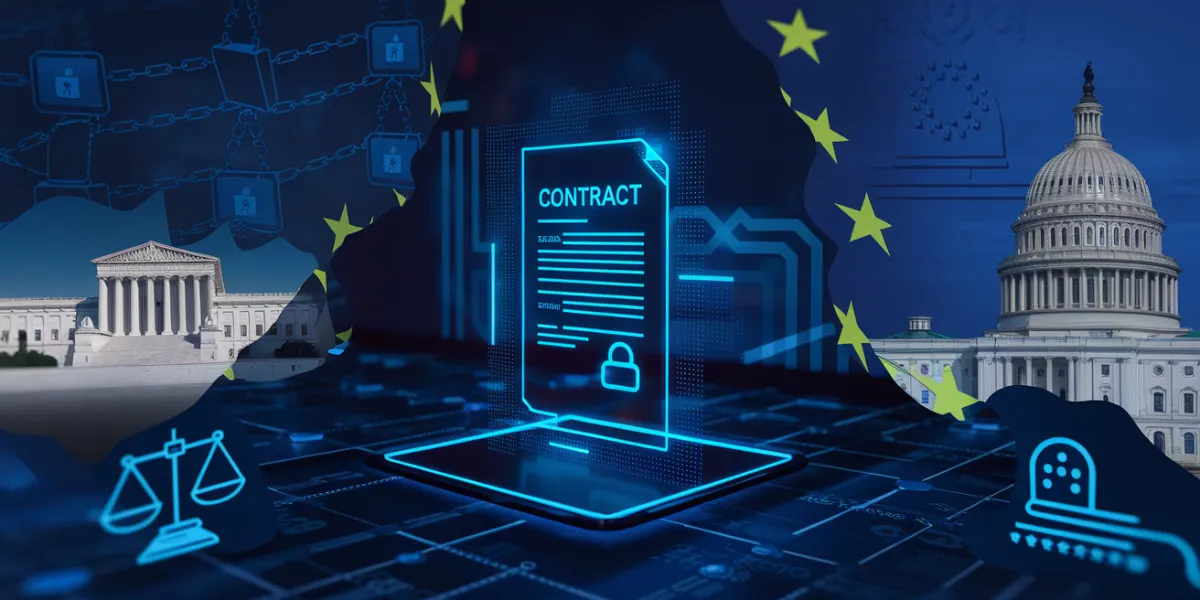
The emergence of smart contracts represents one of the most significant challenges to traditional contract law in the digital age. These self-executing contracts, with terms directly written into code and automatically enforced through blockchain technology, fundamentally challenge conventional notions of agreement formation, performance, and enforcement. As digital assets and decentralized applications proliferate globally, legal systems worldwide are grappling with how to accommodate these technological innovations within existing contractual frameworks.
Smart contracts present unique legal questions that traditional contract law was not designed to address. How do courts interpret code as contractual terms? What happens when algorithmic execution conflicts with equitable principles? How do jurisdictions maintain regulatory oversight while fostering innovation? The responses to these questions vary significantly across different legal traditions and regulatory philosophies, creating a complex patchwork of approaches that reflects broader tensions between technological innovation and legal certainty.
This comparative analysis examines how major jurisdictions are adapting their legal frameworks to recognize and regulate smart contracts, revealing fundamental differences in approach that will shape the future of digital commerce and blockchain-based economic activity.
Conceptual Framework: Understanding Smart Contracts
Technical Foundation and Legal Implications
Smart contracts operate through predetermined code that automatically executes when specified conditions are met, eliminating the need for traditional intermediaries in many contractual relationships. This automation creates both opportunities and challenges for legal systems. While smart contracts can reduce transaction costs and increase execution certainty, they also raise questions about interpretation, modification, and remedy when things go wrong.
The immutable nature of blockchain-based smart contracts creates particular tensions with traditional contract law principles such as mistake, duress, and unconscionability. Once deployed, smart contracts typically cannot be modified or reversed, even if circumstances change or errors are discovered. This characteristic challenges legal systems that have long provided mechanisms for contract modification and equitable relief.
Definitional Challenges Across Jurisdictions
Different jurisdictions have struggled with defining smart contracts in ways that capture their technical functionality while fitting within existing legal categories. Some approaches focus on the technological mechanism, defining smart contracts as code-based automated agreements. Others emphasize the functional equivalence to traditional contracts, treating smart contracts as simply another form of contractual arrangement. These definitional differences have significant implications for how smart contracts are regulated and enforced.
United States: Fragmented State-by-State Innovation
Legislative Pioneering and Regulatory Patchwork
The United States has taken a predominantly state-level approach to smart contract recognition, resulting in a complex patchwork of laws that vary significantly across jurisdictions. This fragmentation reflects both the federal structure of American law and the absence of comprehensive federal legislation addressing blockchain technology and smart contracts.
Delaware’s Corporate Innovation: Delaware, home to many major corporations, has positioned itself as a leader in blockchain-friendly legislation. The Delaware Blockchain Initiative, launched in 2016, includes provisions allowing corporations to maintain records on blockchain systems and recognize blockchain-based stock ledgers. While not exclusively focused on smart contracts, this framework establishes important precedents for recognizing blockchain-based legal arrangements.
Arizona’s Comprehensive Framework: Arizona has enacted some of the most comprehensive smart contract legislation in the United States. The state’s blockchain and smart contract laws explicitly recognize the legal validity of smart contracts and blockchain records, providing that they cannot be denied legal effect solely because they utilize blockchain technology. Arizona’s approach emphasizes technological neutrality while providing legal certainty for blockchain-based arrangements.
Wyoming’s Digital Asset Focus: Wyoming has emerged as a leading jurisdiction for digital asset regulation, with legislation that addresses smart contracts within the broader context of digital asset management. The state’s approach recognizes smart contracts as legally binding agreements while establishing regulatory frameworks for digital asset businesses that rely heavily on smart contract technology.
Federal Regulatory Uncertainty
At the federal level, the United States has not yet developed comprehensive smart contract legislation, creating uncertainty about how federal agencies will approach enforcement and regulation. The Securities and Exchange Commission (SEC) has addressed smart contracts primarily in the context of securities regulation, focusing on whether smart contract-based tokens constitute securities subject to federal securities laws.
The Commodity Futures Trading Commission (CFTC) has taken a more permissive approach, generally treating smart contracts as technological tools rather than regulated entities in themselves. However, the agency has emphasized that smart contracts cannot exempt underlying activities from applicable regulatory requirements.
Judicial Precedents and Case Law Development
American courts are beginning to address smart contract disputes, though comprehensive precedents remain limited. Early cases have generally applied traditional contract law principles to smart contract disputes, focusing on issues such as offer and acceptance, consideration, and performance rather than the technological mechanism of execution.
The challenge for American courts lies in applying equitable principles developed for traditional contracts to immutable code-based agreements. Cases involving coding errors, unexpected market conditions, and disputes over contract interpretation are beginning to establish precedents for how courts will handle smart contract litigation.
European Union: Harmonization Challenges and Regulatory Innovation
Digital Single Market Strategy and Legal Framework
The European Union’s approach to smart contract recognition is shaped by its broader Digital Single Market strategy and commitment to harmonizing digital regulation across member states. The EU’s regulatory philosophy emphasizes consumer protection, data privacy, and market integrity, creating unique challenges for accommodating smart contracts within existing legal frameworks.
Markets in Crypto-Assets Regulation (MiCA): The EU’s MiCA regulation, while primarily focused on cryptocurrency regulation, establishes important precedents for blockchain-based arrangements including smart contracts. MiCA’s approach emphasizes authorization requirements and consumer protection measures that have significant implications for smart contract deployment and operation.
Digital Services Act and Digital Markets Act: These comprehensive digital regulations establish frameworks that indirectly affect smart contract recognition by regulating digital platforms and services. The Acts’ emphasis on transparency, accountability, and user protection creates compliance requirements that smart contract developers must consider.
Member State Variations and National Implementations
Despite EU-wide regulatory initiatives, member states have taken varying approaches to smart contract recognition, reflecting different legal traditions and policy priorities.
Malta’s Blockchain Island Initiative: Malta has positioned itself as a “blockchain island” with comprehensive legislation recognizing smart contracts and providing regulatory frameworks for blockchain businesses. The Malta Digital Innovation Authority Act and related legislation create specific legal categories for blockchain arrangements and establish regulatory oversight mechanisms.
France’s Ordonnance on Blockchain: France has taken a more cautious approach, recognizing blockchain-based records and transactions within specific regulatory frameworks while maintaining traditional contract law principles. French law requires that blockchain-based arrangements comply with existing consumer protection and financial regulation requirements.
Germany’s Civil Code Adaptations: Germany has approached smart contracts through interpretations of existing civil code provisions rather than creating new legislative frameworks. German legal scholars and practitioners have developed sophisticated analyses of how traditional contract law principles apply to code-based agreements, though comprehensive legislation remains limited.
GDPR Implications and Privacy Concerns
The EU’s General Data Protection Regulation (GDPR) creates unique challenges for smart contract implementation, particularly regarding the “right to be forgotten” and data portability requirements. The immutable nature of blockchain-based smart contracts potentially conflicts with GDPR requirements, leading to complex compliance challenges for businesses operating in the EU.
United Kingdom: Post-Brexit Innovation and Legal Modernization
Legal Commission’s Comprehensive Review
The UK Law Commission has undertaken one of the most comprehensive legal analyses of smart contracts globally, examining how English contract law applies to automated agreements. The Commission’s approach emphasizes that smart contracts are not a distinct legal category but rather a technological method for implementing contractual arrangements.
Interpretive Guidance: The Law Commission’s guidance addresses key issues including contract formation, interpretation of code as contractual terms, and the relationship between natural language contracts and their coded implementations. This approach provides legal certainty while maintaining flexibility for technological innovation.
Remedial Challenges: The Commission has identified particular challenges in applying traditional remedies such as rectification and rescission to immutable smart contracts, suggesting that new approaches may be needed to address these situations.
Financial Services Regulation and Innovation
The UK’s Financial Conduct Authority (FCA) has taken a proactive approach to smart contract regulation within financial services, establishing regulatory sandboxes that allow experimentation with smart contract-based financial products while maintaining consumer protection.
The Bank of England has explored central bank digital currency (CBDC) implementations that would rely heavily on smart contract technology, indicating official recognition of smart contracts’ potential in monetary policy implementation.
Common Law Adaptability
The UK’s common law system has shown particular adaptability to smart contract challenges, with courts and legal practitioners developing practical approaches to smart contract disputes. The flexibility of common law principles has allowed for creative solutions to novel legal questions raised by blockchain technology.
Singapore: Strategic Legal Innovation Hub
Model AI Governance and Smart Contract Framework
Singapore has emerged as a leading jurisdiction for smart contract innovation through its comprehensive approach to emerging technologies. The country’s Model AI Governance Framework includes provisions addressing automated decision-making systems, including smart contracts, emphasizing accountability and transparency in algorithmic systems.
Payment Services Act: Singapore’s Payment Services Act creates regulatory frameworks that accommodate smart contract-based payment systems while maintaining financial stability and consumer protection. The Act’s technology-neutral approach allows for innovation while ensuring regulatory compliance.
Variable Capital Company Structure: Singapore’s introduction of Variable Capital Company structures specifically designed for digital asset management demonstrates the country’s willingness to adapt corporate law to accommodate blockchain-based business models that rely heavily on smart contracts.
Monetary Authority of Singapore (MAS) Initiatives
MAS has been particularly proactive in addressing smart contract applications in financial services, establishing regulatory sandboxes and providing guidance on smart contract implementation in regulated activities. The authority’s approach balances innovation promotion with risk management, creating frameworks that allow for smart contract experimentation while maintaining financial stability.
Cross-Border Recognition Framework
Singapore has developed frameworks for recognizing foreign smart contract arrangements, addressing the cross-border nature of blockchain-based agreements. This approach acknowledges that smart contracts often operate across multiple jurisdictions simultaneously, requiring coordination between different legal systems.
China: Controlled Innovation and State Oversight
Blockchain Service Network and Regulatory Framework
China’s approach to smart contracts reflects the country’s broader strategy of embracing blockchain technology while maintaining strict regulatory control. The Blockchain Service Network (BSN) initiative creates state-controlled infrastructure for blockchain applications, including smart contracts, that operate under government oversight.
Regulatory Licensing Requirements: China requires licensing for blockchain-based services, including smart contract platforms, creating a controlled environment for innovation. This approach allows for technological development while ensuring state oversight of blockchain applications.
Digital Currency Electronic Payment (DCEP): China’s central bank digital currency initiative relies heavily on smart contract technology for programmable money applications, demonstrating official recognition of smart contracts’ utility in monetary policy implementation.
Civil Code Provisions and Electronic Contracts
China’s updated Civil Code includes provisions addressing electronic contracts that potentially encompass smart contracts, though specific smart contract legislation remains limited. The Code’s approach emphasizes traditional contract law principles while acknowledging electronic implementation methods.
Judicial Interpretations and Court Decisions
Chinese courts have begun addressing smart contract disputes, generally applying traditional contract interpretation principles while recognizing the technological implementation method. Notable cases have addressed issues such as contract formation in automated systems and liability for coding errors.
Japan: Regulatory Sandboxes and Innovation Support
Society 5.0 Initiative and Digital Transformation
Japan’s Society 5.0 initiative includes provisions for blockchain and smart contract innovation as part of the country’s digital transformation strategy. This comprehensive approach addresses smart contracts within broader digitalization efforts rather than as isolated technological phenomena.
Financial Services Agency (FSA) Guidance: The FSA has provided guidance on smart contract applications in financial services, emphasizing risk management and consumer protection while allowing for innovation. Japan’s approach balances technological advancement with financial stability concerns.
Regulatory Sandbox Framework: Japan’s regulatory sandbox allows for experimentation with smart contract-based services under relaxed regulatory requirements, enabling innovation while maintaining oversight capabilities.
Corporate Law Adaptations
Japanese corporate law has been adapted to accommodate blockchain-based record-keeping and smart contract applications in corporate governance, demonstrating flexibility in traditional legal frameworks to accommodate technological innovation.
Switzerland: Crypto Valley and Legal Innovation
Distributed Ledger Technology Act
Switzerland’s DLT Act provides comprehensive legal frameworks for blockchain applications, including smart contracts, emphasizing legal certainty while maintaining technological neutrality. The Act addresses key issues such as the legal nature of digital assets and rights transfer through blockchain systems.
Civil Code Adaptations: Swiss civil law has been interpreted to accommodate smart contracts through existing contract law principles, with particular attention to automation and algorithmic execution issues.
Cross-Border Recognition: Switzerland has developed frameworks for recognizing foreign blockchain arrangements, acknowledging the global nature of blockchain networks and smart contract deployments.
Financial Market Supervision and Innovation
The Swiss Financial Market Supervisory Authority (FINMA) has provided comprehensive guidance on smart contract applications in financial services, creating regulatory clarity while promoting innovation. FINMA’s approach emphasizes functional regulation rather than technology-specific rules.
Emerging Economies: Leapfrog Opportunities and Challenges
UAE’s Blockchain Strategy 2071
The United Arab Emirates has launched an ambitious blockchain strategy that positions smart contracts as key components of the country’s digital transformation. The strategy includes regulatory frameworks and government adoption initiatives that demonstrate comprehensive smart contract recognition.
India’s Regulatory Development
India’s approach to smart contracts remains evolving, with regulatory authorities examining how existing laws apply to blockchain-based arrangements. The country’s focus on digital payments and financial inclusion creates opportunities for smart contract applications, though comprehensive regulation remains under development.
African Union’s Digital Transformation
Several African countries are exploring smart contract applications for land registry, supply chain management, and financial services, viewing blockchain technology as an opportunity to leapfrog traditional infrastructure limitations.
Comparative Analysis: Convergence and Divergence
Common Challenges Across Jurisdictions
Despite different regulatory approaches, jurisdictions face similar challenges in accommodating smart contracts within existing legal frameworks. Key common issues include:
Interpretation and Evidence: How should courts interpret code as contractual terms, and what standards of evidence apply to blockchain-based records? Most jurisdictions are developing approaches that treat code as one form of contractual expression while maintaining traditional interpretation principles.
Remedial Mechanisms: Traditional contract remedies such as rescission and rectification may be difficult or impossible to apply to immutable smart contracts. Jurisdictions are exploring alternative approaches including insurance mechanisms and dispute resolution procedures.
Cross-Border Enforcement: Smart contracts often operate across multiple jurisdictions simultaneously, creating challenges for determining applicable law and enforcement mechanisms. International coordination efforts remain limited, though some bilateral and multilateral initiatives are emerging.
Regulatory Philosophy Differences
Jurisdictions differ significantly in their fundamental approaches to smart contract regulation:
Technology-Neutral vs. Technology-Specific: Some jurisdictions emphasize technology-neutral regulation that applies existing legal principles to smart contracts, while others create specific legal categories and rules for blockchain-based arrangements.
Innovation-First vs. Risk-First: Regulatory approaches vary in their balance between promoting innovation and managing risks, with some jurisdictions creating permissive frameworks for experimentation while others emphasize consumer protection and financial stability.
State Control vs. Private Innovation: Jurisdictions differ in their comfort with decentralized systems, with some promoting state-controlled blockchain infrastructure while others allow private innovation with minimal oversight.
Market Impact and Forum Shopping
These regulatory differences create opportunities for forum shopping, where businesses choose jurisdictions based on favorable smart contract regulations. This dynamic may drive regulatory competition and convergence over time, though significant differences are likely to persist due to varying legal traditions and policy priorities.
Future Directions and Emerging Trends
Standardization Efforts and International Coordination
International organizations including the United Nations Commission on International Trade Law (UNCITRAL) are beginning to address smart contract legal recognition, though comprehensive international standards remain limited. Regional initiatives such as the EU’s digital strategy may drive broader harmonization efforts.
Technological Development Impact
Advancing blockchain technology, including improvements in scalability, interoperability, and programmability, will continue to challenge existing legal frameworks. Layer 2 solutions, cross-chain protocols, and quantum-resistant cryptography may require new regulatory approaches.
Integration with Traditional Legal Systems
The future of smart contract regulation likely involves deeper integration with traditional legal systems rather than replacement of existing frameworks. Hybrid approaches that combine automated execution with traditional legal oversight may become predominant.
Conclusion
The global landscape of smart contract legal recognition reveals a complex tapestry of approaches that reflect different legal traditions, regulatory philosophies, and policy priorities. While no jurisdiction has yet developed a comprehensive framework that fully addresses all smart contract challenges, emerging approaches demonstrate both the possibilities and limitations of adapting traditional legal systems to accommodate technological innovation.
The comparative analysis reveals several key insights. First, jurisdictions that have taken proactive approaches to smart contract recognition, such as Arizona, Malta, and Singapore, have generally succeeded in attracting blockchain-based businesses and innovation. Second, the challenge of applying traditional legal remedies to immutable code-based agreements remains largely unsolved across all jurisdictions. Third, the cross-border nature of blockchain networks creates ongoing challenges for jurisdictional coordination that require international cooperation.
Looking forward, the evolution of smart contract legal recognition will likely be shaped by several factors: technological developments that address current limitations, increased cross-border coordination as blockchain adoption grows, and the development of new legal concepts specifically designed for automated and algorithmic agreements.
The success of different jurisdictional approaches will ultimately be measured not only by their ability to provide legal certainty and promote innovation, but also by their effectiveness in protecting parties to smart contract arrangements and maintaining public confidence in digital commerce. As blockchain technology continues to mature and smart contracts become more prevalent in commercial relationships, the jurisdictions that develop the most effective and balanced regulatory frameworks will likely emerge as leaders in the digital economy.
The ongoing evolution of smart contract legal recognition represents a fundamental transformation in how legal systems accommodate technological innovation. The comparative approaches examined here provide valuable insights into the possibilities and challenges of this transformation, offering lessons for policymakers, legal practitioners, and technologists working to build the legal infrastructure for the digital future.