
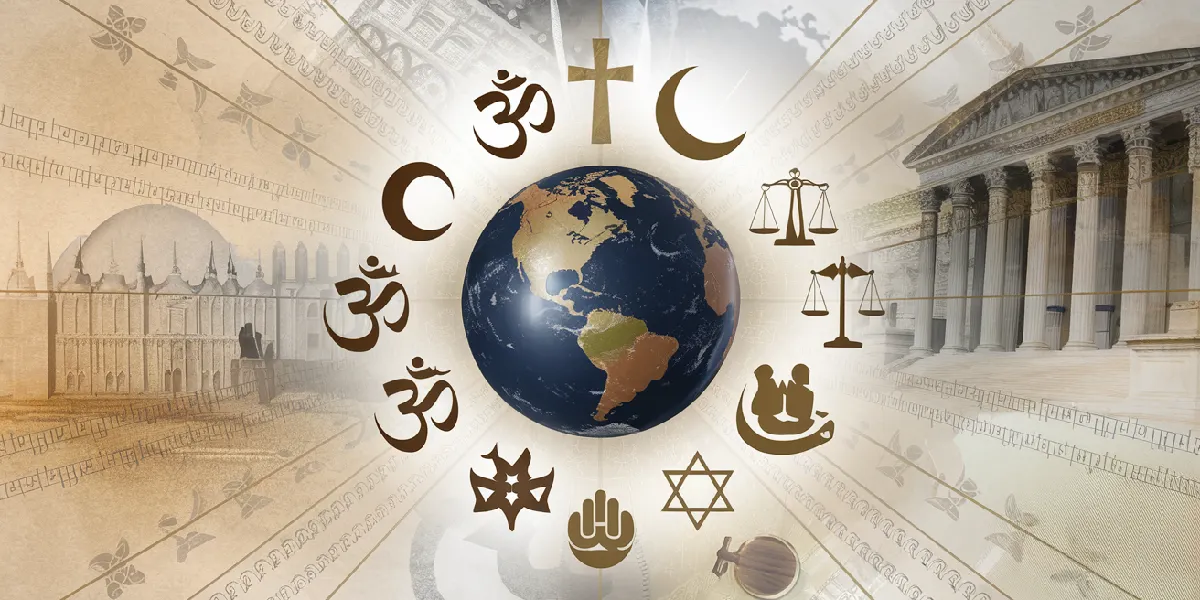
The intersection of religious freedom and personal laws represents one of the most complex challenges facing modern constitutional democracies. How do societies balance respect for religious autonomy with commitments to gender equality, individual rights, and uniform citizenship? This question strikes at the heart of fundamental tensions between communal identity and individual liberty, between historical tradition and contemporary values, between religious authority and state sovereignty.
India’s elaborate system of personal laws governing marriage, divorce, inheritance, and family relations according to religious community offers perhaps the world’s most intricate example of this challenge. Unlike most modern democracies that have largely secularized family law, India has maintained parallel legal systems for different religious communities, creating what legal scholar Marc Galanter termed “legal pluralism” within a unified constitutional framework.
This analysis examines how India’s approach compares with the more uniformly secular systems of the United States, France, and Canada, exploring not just the mechanics of different approaches but their underlying philosophical assumptions about the nature of religious freedom, individual autonomy, and state authority in diverse societies.
India’s Personal Law System: Complexity and Contradiction
Historical Foundations and Constitutional Framework
India’s personal law system emerged from the colonial encounter between British administrative efficiency and indigenous legal traditions. The British, seeking to govern diverse populations without provoking religious upheaval, adopted a policy of legal pluralism that preserved community-specific laws while establishing British-administered civil and criminal codes. This pragmatic compromise created parallel legal universes that persist today.
The Indian Constitution both preserves and complicates this inheritance. Article 25 guarantees freedom of religion, including the right to practice and propagate one’s faith, while Article 44 directs the state toward establishing a uniform civil code. This apparent contradiction reflects the framers’ recognition that immediate legal uniformity might threaten religious freedom and social harmony, while long-term unity required movement toward common citizenship norms.
The constitutional framework thus creates what Rajeev Dhavan calls “managed pluralism”—a system that accommodates religious diversity while maintaining overarching constitutional supremacy. The Supreme Court can intervene when personal laws violate fundamental rights, but it has generally shown deference to religious autonomy except in cases of clear constitutional violation.
The Landscape of Legal Pluralism
India’s personal law system encompasses distinct legal frameworks for Hindus (including Buddhists, Sikhs, and Jains under the Hindu Marriage Act), Muslims, Christians, Parsis, and Jews. Each system governs family relations according to religious law interpreted through centuries of judicial precedent and scholarly commentary.
Hindu personal law underwent significant codification in the 1950s through legislation that modernized traditional practices while maintaining religious identity. The Hindu Marriage Act (1955) prohibited polygamy, liberalized divorce, and enhanced women’s inheritance rights, demonstrating how personal law can evolve within religious frameworks.
Muslim personal law remains largely uncodified, governed by Sharia principles as interpreted by various schools of Islamic jurisprudence. This creates greater diversity within the system but also generates controversy when traditional interpretations conflict with contemporary gender equality norms. The recent abolition of triple talaq through legislative intervention illustrates the ongoing tension between religious autonomy and constitutional rights.
Christian personal law varies by denomination and region, reflecting the diversity of Christian communities in India. The Indian Christian Marriage Act governs most Christian marriages, while certain communities follow customary practices modified by judicial interpretation. Parsi personal law, governing the small but influential Zoroastrian community, has remained largely unchanged due to community conservatism and demographic concerns.
The American Model: Secular Uniformity and Religious Accommodation
Constitutional Foundations: Separation and Accommodation
The American approach to religious freedom and family law rests on the First Amendment’s dual guarantee of religious free exercise and prohibition of religious establishment. This creates what constitutional scholar Douglas Laycock calls “substantive neutrality” the state neither helps nor hinders religion but maintains strict separation between religious and civil authority.
Unlike India’s system of parallel personal laws, American family law is uniformly secular, governed by state legislation and judicial precedent without reference to religious doctrine. Marriage is treated as a civil contract regulated by state governments, with religious ceremonies holding no independent legal significance. This separation reflects the American understanding that religious freedom requires protecting religion from state interference rather than incorporating religious law into state authority.
However, the American system accommodates religious diversity through what might be called “private ordering within public law.” Religious communities remain free to establish internal norms for marriage and family relations, provided these do not conflict with overriding state interests. Orthodox Jewish communities, for example, maintain elaborate systems of religious family law alongside civil requirements, with civil courts sometimes enforcing religious arbitration agreements.
Religious Arbitration and the Limits of Accommodation
The American approach to religious arbitration in family matters illustrates both the possibilities and limits of accommodation within secular legal frameworks. Courts have generally enforced agreements to submit family disputes to religious arbitration, treating them as valid contracts between consenting parties.
However, this accommodation has boundaries. In cases like Avitzur v. Avitzur (1983), courts have enforced agreements to participate in religious divorce proceedings but have refused to apply religious law directly. The state maintains authority over the substantive legal framework while allowing religious communities autonomy in process and internal governance.
This approach differs fundamentally from India’s system by maintaining clear hierarchical relationships: civil law remains supreme, with religious law operating as a form of specialized arbitration rather than parallel authority. Religious freedom is protected through exit rights and voluntary association rather than through recognition of autonomous religious legal systems.
France: Laïcité and the Republican Model
The Philosophy of Laïcité
France’s approach to religious freedom and personal law reflects the distinctive philosophy of laïcité—a form of secularism that goes beyond American-style separation to actively promote republican values over religious particularity. This approach emerged from France’s historical struggle against Catholic Church dominance and has evolved into a comprehensive philosophy of citizenship that subordinates religious identity to republican equality.
The French Civil Code, established under Napoleon and continuously updated, governs all family relations without regard to religious affiliation. Marriage is exclusively a civil institution, with religious ceremonies having no legal significance. This uniformity reflects the republican principle that all citizens share common legal status regardless of religious background.
French laïcité permits private religious practice while strictly limiting public religious expression, particularly in state institutions. This creates a different balance from both American accommodation and Indian pluralism—religious freedom is protected in private spheres while public life remains rigorously secular.
Contemporary Challenges: Islam and Republican Integration
France’s encounter with its growing Muslim population has tested the limits and application of laïcité. Unlike India’s accommodation of Islamic personal law or America’s private religious arbitration, France has maintained strict adherence to civil law uniformity even as Muslim communities have sought greater accommodation for religious practices.
The controversy over Islamic headscarves in schools, Islamic family practices, and religious symbols in public spaces reflects deeper tensions between republican assimilation and multicultural accommodation. France’s approach insists that religious freedom requires adaptation to republican norms rather than accommodation of religious difference within public frameworks.
This has created particular tensions around Islamic family law, where traditional practices may conflict with French gender equality norms and secular legal principles. Unlike India’s system of managed accommodation or America’s private arbitration approach, France offers little space for religious family law even in voluntary, private contexts.
Gender Equality and Religious Autonomy
The French emphasis on gender equality as a republican value creates a different framework for analyzing religious family practices than either Indian accommodation or American neutrality. French feminists have generally supported laïcité as protecting women from religious patriarchy, arguing that uniform civil law provides better protection than accommodation of religious difference.
This perspective influences French policy toward Muslim family practices, with restrictions on polygamy, forced marriage, and other practices viewed as contrary to republican gender equality. The French approach prioritizes individual rights over community autonomy, reflecting a different understanding of religious freedom than systems that accommodate religious diversity through legal pluralism.
Canada: Multiculturalism and Managed Accommodation
Constitutional Framework: Rights and Accommodation
Canada’s approach to religious freedom and personal law reflects the distinctive Canadian commitment to multiculturalism within a framework of constitutional rights. The Charter of Rights and Freedoms guarantees both religious freedom and gender equality while the Constitution explicitly recognizes Canada as a multicultural society.
Like the United States, Canada maintains uniform civil family law across provinces, with marriage and divorce governed by secular legislation. However, Canadian multiculturalism creates greater space for accommodating religious diversity within this framework than American or French approaches typically allow.
The Canadian system permits religious arbitration in family matters, subject to Charter compliance and voluntary participation. This creates a middle path between Indian legal pluralism and French republican uniformity—accommodation through process rather than parallel legal systems.
The Ontario Sharia Debate: Limits of Accommodation
Canada’s approach to religious family law faced its greatest test in the Ontario Sharia arbitration controversy of 2003-2005. Muslim organizations sought official recognition for Islamic family arbitration, similar to existing Jewish and Christian arbitration systems. The proposal generated intense debate about the limits of multiculturalism and religious accommodation.
The eventual decision to prohibit all religious family arbitration while maintaining secular arbitration options illustrates Canada’s commitment to both multiculturalism and gender equality. Unlike India’s preservation of religious personal laws or America’s enforcement of religious arbitration agreements, Canada chose to limit accommodation when religious autonomy conflicted with gender equality concerns.
This resolution reflects what constitutional scholar Ayelet Shachar calls “transformative accommodation”—modifying traditional accommodation approaches to better protect individual rights while maintaining respect for cultural diversity. The Canadian approach seeks to balance group rights with individual autonomy through institutional design rather than through parallel legal systems.
Indigenous Rights and Legal Pluralism
Canada’s relationship with Indigenous peoples creates a different form of legal pluralism than India’s religious personal law system. Indigenous communities maintain significant autonomy over family relations through treaty rights, traditional governance systems, and federal legislation like the Indian Act.
This Indigenous legal pluralism operates differently from religious accommodation, based on historical sovereignty and treaty relationships rather than religious freedom. However, it creates similar tensions between community autonomy and individual rights, particularly regarding gender equality and traditional governance practices.
The Canadian approach to Indigenous legal autonomy provides insights for managing religious legal pluralism—accommodation through recognition of limited sovereignty rather than integration within state legal systems. This model suggests alternatives to both Indian incorporation and French assimilation approaches.
Comparative Analysis: Models and Tensions
Philosophical Foundations: Individual vs. Community Rights
The four systems reflect fundamentally different approaches to balancing individual autonomy with community identity. India’s personal law system prioritizes community accommodation within constitutional limits, reflecting post-colonial recognition of diversity and historical minority concerns. The United States emphasizes individual choice within secular frameworks, protecting religious freedom through voluntary association and exit rights.
France prioritizes republican equality over community difference, viewing uniform citizenship as essential to individual freedom and social cohesion. Canada seeks to balance multiculturalism with individual rights through institutional mechanisms that accommodate diversity while protecting vulnerable individuals.
These different approaches reflect varying historical experiences, demographic compositions, and philosophical commitments. India’s approach emerges from colonial legal pluralism and post-independence accommodation of religious minorities. The American model reflects Protestant individualism and church-state separation traditions. French laïcité grows from republican struggle against Catholic dominance and commitment to civic equality. Canadian multiculturalism reflects constitutional recognition of diversity within a rights-protective framework.
Gender Equality: The Central Tension
Gender equality provides the most significant test case for different approaches to religious accommodation. All four systems struggle with tensions between religious autonomy and women’s rights, but their responses vary significantly.
India’s system creates the most complex gender equality challenges through its preservation of traditional religious laws that often disadvantage women. The Supreme Court’s interventions in cases like Shah Bano (1985) and subsequent legislative responses illustrate ongoing tensions between religious accommodation and gender equality. Recent reforms like the abolition of triple talaq show movement toward greater gender protection while maintaining religious accommodation frameworks.
The American approach protects gender equality through uniform civil law while allowing religious communities to maintain internal practices. This creates fewer direct conflicts but may provide inadequate protection for women in closed religious communities with limited exit options. The emphasis on individual choice assumes effective freedom to leave, which may not exist for all women in religious communities.
France’s republican approach provides the strongest gender equality protections through uniform application of secular law and limited accommodation of religious difference. However, this approach may marginalize religious women who view their religious identity as essential to their dignity and autonomy.
Canada’s managed accommodation approach seeks to protect both religious diversity and gender equality through institutional design. The prohibition of religious family arbitration while maintaining cultural accommodation in other areas reflects this balancing approach.
Religious Freedom: Negative vs. Positive Rights
The systems also differ in their understanding of religious freedom as negative rights (freedom from interference) versus positive rights (entitlement to accommodation). India’s approach encompasses both negative and positive dimensions, protecting religious communities from state interference while providing positive accommodation through personal law systems.
The American model emphasizes negative rights—protecting religious practice from government interference while maintaining state neutrality. Religious freedom operates primarily through non-establishment and voluntary association rather than through positive accommodation or recognition.
France’s laïcité provides negative protection for private religious practice while strictly limiting positive accommodation in public spheres. Religious freedom exists primarily as private belief rather than public practice or community autonomy.
Canada’s multiculturalism includes both negative and positive dimensions but limits positive accommodation when it conflicts with other Charter rights. The Canadian approach seeks to maximize both individual and group freedoms through institutional balance rather than through hierarchy or integration.
Contemporary Challenges: Globalization and Legal Pluralism
Migration and Transnational Religion
Contemporary migration patterns create new challenges for all four systems as religious communities maintain transnational connections and seek to preserve traditional practices in new legal environments. Muslim communities in France, Hindu communities in Canada, and Christian communities in India all navigate between local legal requirements and transnational religious authority.
These challenges test the boundaries of accommodation in each system. India’s established pluralism provides space for accommodating new religious practices but may struggle with communities that lack historical recognition. American neutrality accommodates new religious diversity through private ordering but may not address community-specific needs. French laïcité maintains uniformity but may exclude communities that cannot adapt to republican requirements. Canadian multiculturalism provides institutional accommodation but limits religious autonomy when it conflicts with Charter rights.
Digital Technology and Religious Authority
Digital technology creates new forms of religious authority and community that transcend national boundaries, challenging territorial approaches to religious accommodation. Online religious arbitration, digital religious education, and virtual religious communities create new forms of religious practice that may not fit within existing accommodation frameworks.
These developments may favor systems like India’s that accommodate religious diversity through flexible frameworks rather than rigid uniformity. However, they also create new challenges for protecting individual rights within transnational religious communities that may operate beyond effective state oversight.
Climate Change and Religious Land Use
Environmental challenges create new tensions between religious accommodation and collective welfare that test all systems. Religious communities’ land use practices, resource consumption patterns, and environmental values may conflict with climate change mitigation efforts or environmental protection requirements.
These challenges may require new approaches to religious accommodation that balance community autonomy with collective survival needs. The development of environmental religious thought and practice may also influence how religious communities understand their relationship to secular law and state authority.
The Future of Religious Accommodation: Lessons and Trajectories
Institutional Innovation and Adaptive Accommodation
The comparative analysis suggests that successful religious accommodation requires institutional innovation rather than simple choice between accommodation and uniformity. India’s managed pluralism, American private ordering, French republican integration, and Canadian transformative accommodation all represent different institutional responses to similar underlying tensions.
Future developments may require hybrid approaches that combine elements from different systems. For example, India’s system might benefit from stronger individual rights protections while maintaining community accommodation. American neutrality might incorporate stronger positive accommodation while preserving secular authority. French laïcité might develop space for cultural accommodation within republican frameworks. Canadian multiculturalism might expand accommodation while strengthening rights protection.
The Role of Civil Society and Religious Leadership
All four systems depend significantly on civil society organizations and religious leadership to mediate between religious tradition and contemporary legal requirements. Progressive religious movements, women’s rights organizations, and interfaith dialogue groups play crucial roles in facilitating accommodation while protecting individual rights.
The success of different accommodation approaches may depend less on their formal legal structures than on the quality of civil society institutions that support dialogue, mediation, and gradual adaptation. Systems that foster robust civil society engagement may achieve better outcomes than those that rely primarily on state authority or community autonomy.
International Human Rights and Constitutional Convergence
International human rights norms create pressures for convergence across different systems while respecting cultural diversity and religious freedom. The development of international standards for women’s rights, children’s rights, and religious freedom may influence domestic accommodation approaches across all systems.
However, the comparative analysis also suggests that effective accommodation must be grounded in particular historical contexts and constitutional traditions rather than imposed through universal models. The challenge is developing international standards that promote human dignity while respecting legitimate diversity in accommodation approaches.
Conclusion: Toward Principled Pluralism
The comparative analysis of religious freedom and personal laws across India, the United States, France, and Canada reveals both the diversity of viable approaches and the universality of underlying tensions. No system has achieved perfect balance between religious accommodation and individual rights, but each offers insights for managing these tensions constructively.
India’s personal law system demonstrates both the possibilities and challenges of legal pluralism within constitutional democracy. The system’s accommodation of religious diversity has contributed to social stability and minority protection, but has also created gender equality challenges and legal complexity. Recent reforms suggest movement toward greater individual rights protection while maintaining accommodation frameworks.
The American model shows how secular uniformity can coexist with robust religious freedom through private ordering and voluntary association. However, this approach may provide inadequate protection for individuals within closed religious communities and may not address community-specific accommodation needs in increasingly diverse societies.
France’s republican approach illustrates how uniform citizenship can promote gender equality and social integration, but may marginalize communities that cannot adapt to secular requirements. The French experience suggests the importance of distinguishing between legitimate religious accommodation and practices that undermine fundamental rights.
Canada’s managed accommodation approach offers a middle path that seeks to balance multiculturalism with individual rights through institutional innovation. The Canadian experience suggests possibilities for transformative accommodation that respects diversity while protecting vulnerable individuals.
The fundamental lesson from this comparative analysis is that successful accommodation of religious diversity requires principled approaches rather than simple accommodation or uniformity. Principled pluralism must be grounded in constitutional values, responsive to particular contexts, and committed to both community dignity and individual autonomy.
This means developing institutional mechanisms that can accommodate legitimate religious diversity while protecting fundamental rights, particularly for women and other vulnerable community members. It requires fostering civil society institutions that can mediate between religious tradition and contemporary values. It demands constitutional frameworks that can evolve to meet new challenges while maintaining core commitments to human dignity.
Perhaps most importantly, it requires recognition that religious accommodation is not a technical legal problem with purely legal solutions, but a fundamental challenge of living together in diversity that requires ongoing dialogue, mutual respect, and shared commitment to both community flourishing and individual freedom.
The future of religious accommodation in diverse democracies will likely require continued innovation and adaptation rather than adherence to any single model. The experiences of India, the United States, France, and Canada provide valuable resources for this ongoing experiment in principled pluralism, but the ultimate test will be their ability to evolve in response to new challenges while maintaining their core commitments to human dignity and democratic governance.
As societies become increasingly diverse and interconnected, the question of religious accommodation becomes ever more pressing. The comparative analysis suggests that success requires not choosing between accommodation and uniformity, but developing sophisticated institutional responses that honor both religious freedom and human equality. This is perhaps the greatest challenge facing contemporary constitutional democracy, and one that will require wisdom, creativity, and sustained commitment from all members of diverse societies.